
Replacing Legacy Fuel Storage Tanks at a Major UK Hospital
The challenge
Following a £4 million investment in new boiler systems, a major hospital needed to modernise its ageing fuel storage infrastructure to ensure the reliability of its backup fuel supply.
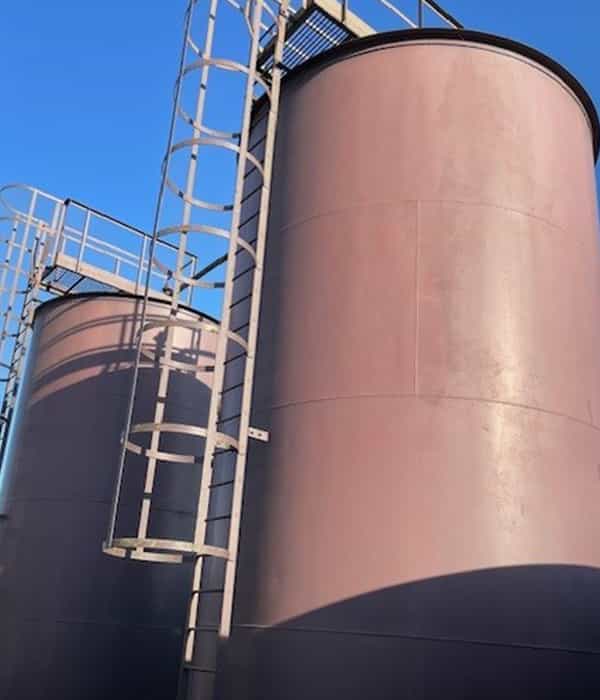
The site’s existing fuel installation consisted of two 277,000 litre bulk storage tanks and a 50,000 litre reception tank, all of which had been in service for approximately 75 years.
In addition, two dormant 55,000 litre tanks remained within the bund and required safe removal.
The project presented several technical challenges:
- Removing large, ageing tanks while minimising disruption and project costs
- Maintaining fuel availability throughout the works to ensure uninterrupted operations
- Safely managing and removing asbestos containing gaskets identified within the existing tanks
- Working within a confined location surrounded by mature trees, limiting crane access and lifting
operations
The solution
To maintain a continuous fuel supply, we installed a 20,000-litre temporary tank from our rental fleet before work commenced. More than 20,000 litres of existing red diesel was then professionally polished and retained for continued use, while the remaining 80,000 litres was removed and rebated back to the customer, helping to offset project costs.
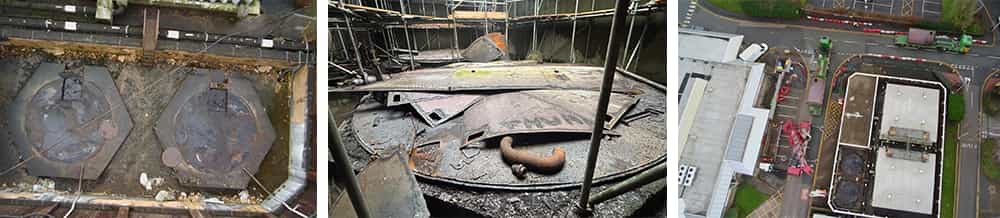
Following the safe removal of the asbestos gaskets by a specialist contractor, our engineering teams cleaned the tanks and associated pipework before preparing them for dismantling.
To reduce the cost and complexity of lifting operations, a bespoke 360 degree free-standing scaffold was erected around the tanks. This enabled our engineers to pre-cut the tank shells into manageable sections, allowing them to be removed over several days and significantly reducing both the crane time required and site disruption.
Once the legacy tanks had been removed, the existing bund and plinths were thoroughly cleaned, jet washed and prepared for the installation of a new system.
A structural engineer designed an extension to the existing concrete plinth to accommodate the replacement tank.
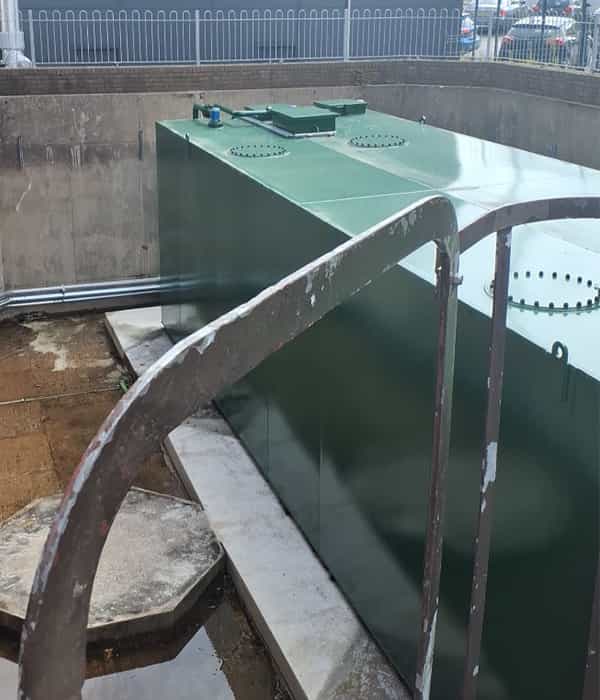
After the new foundation had cured, a 120,000-litre split compartment fuel tank was delivered and installed using a 350-tonne crane, selected to meet the site’s challenging lifting requirements.
The installation was completed with:
- New stainless steel pipework
- A modern fill cabinet
- Advanced fuel gauging and alarm systems
- Integrated telemetry, allowing the hospital’s estates team to remotely monitor fuel levels
The result
The hospital now benefits from a modern, compliant and future-ready fuel storage system designed to support its critical infrastructure for years to come.
Key project outcomes included:
- Safe removal of five ageing fuel tanks, including dormant assets
- Uninterrupted fuel availability throughout the project using a temporary tank solution
- Recovery and reuse of serviceable fuel through professional fuel polishing
- Reduced project costs through innovative dismantling techniques that minimised crane usage and site disruption
- Installation of a new high-capacity fuel storage system with modern monitoring technology
- Enhances operational resilience and improved fuel management through remotely monitored tank telemetry
- A fully compliant installation delivered safely, efficiently and with minimal disruption to hospital operations
By combining engineering expertise, careful project planning and innovative installation techniques, Crown Oil Environmental delivered a complex fuel infrastructure replacement that strengthened the hospital’s emergency fuel resilience while reducing operational risk.
If your hospital or healthcare facility requires fuel or tank-related services, get in touch with our team today on 0330 123 3399. Our experts provide tailored solutions to support your operations, helping you maintain a safe, reliable and resilient fuel infrastructure.